[DEARBORN PUBLIC LIBRARY -- SEPTEMBER -- AFTERNOON]
A visiting screenwriter, EVAN HOLT, mid-60s, soft Midwestern lilt,
wanders in like a man walking into a memory he hasn’t lived yet.
He holds a flash drive like it’s a relic.
At the front desk stands SAMI FAHD — Arab-American, Oxford-educated, immaculate tie, calm precision.
A man who treats books like living creatures.
EVAN:
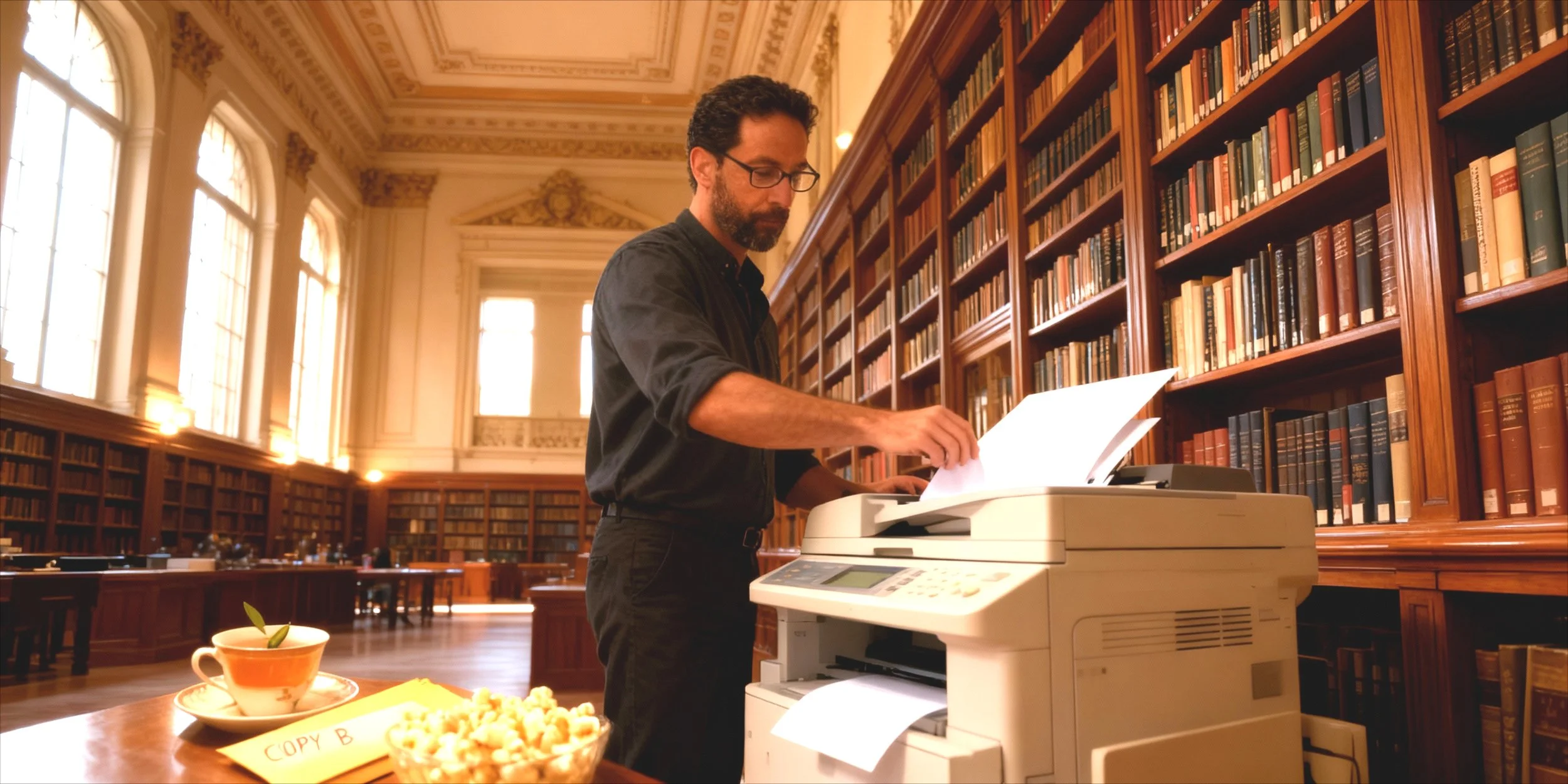
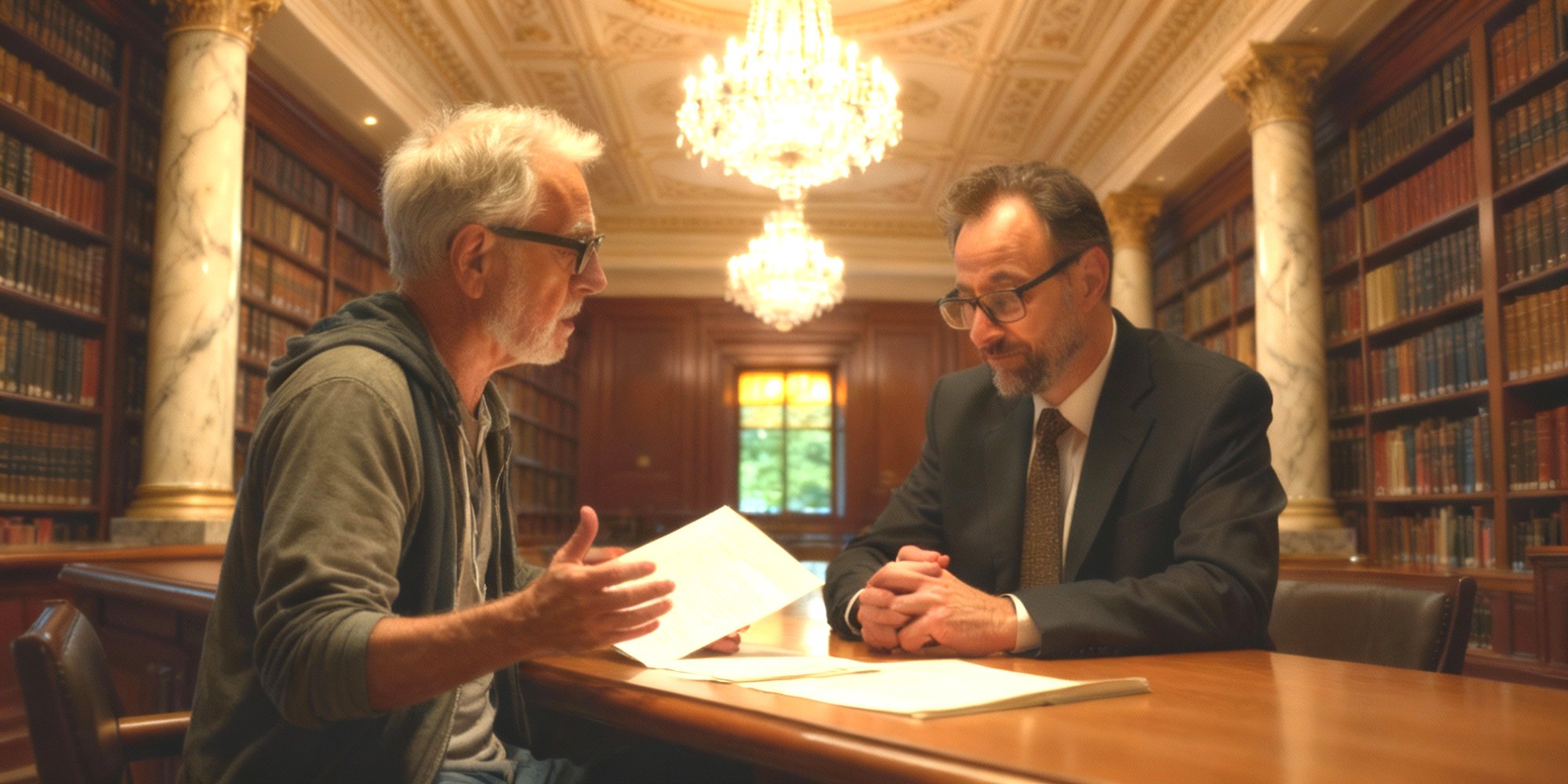
I need about three hundred pages printed.
My first real script.
Printer’s my final audience.
Can I do that here?
Sami studies him — not with judgment, but with the faint curiosity of someone who recognizes another craftsman.
SAMI:
I can do that for you.
Take your time. The storm’s not going anywhere.
The printer hums to life.
Pages spill out clean and rhythmic, like prophecy arranging itself line by line.
Sami glances at a few sheets —
strong prose, unsettling in its confidence, oddly self-aware.
Evan wanders upstairs to the quiet study loft.
Sami hesitates.
Then quietly makes a duplicate set “for quality review.”
He slips the pages into a manila envelope.
COPY B.
Night settles like velvet.
The storm thickens.
Sami locks the library, umbrella tapping as he walks into the rain.
[SAMI’S APARTMENT — EVENING]
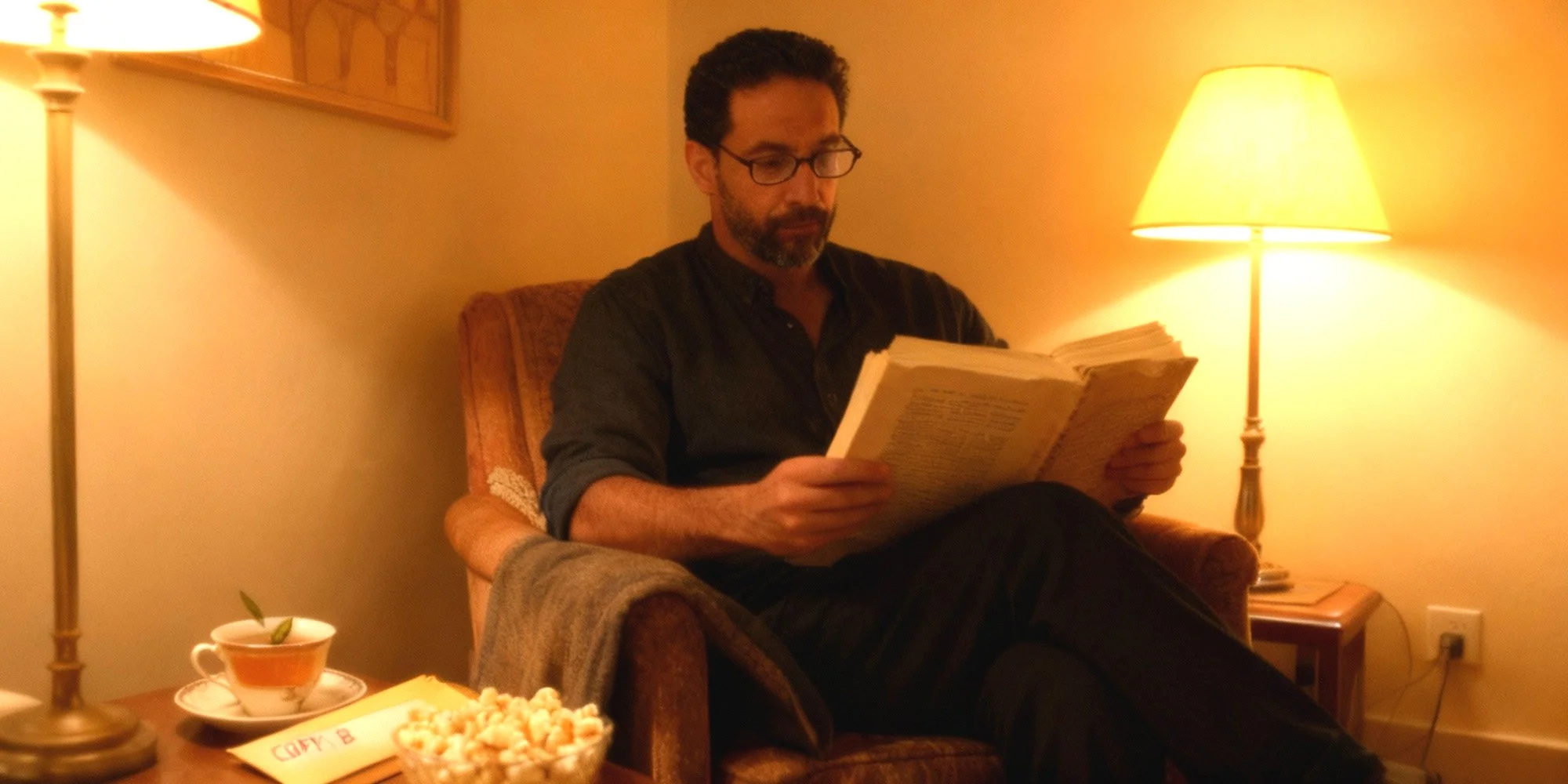
At home — small apartment, warm lamps, the smell of cardamom tea — he settles into his favorite chair with popcorn and the envelope marked COPY B.
He begins reading.
At first: amusement.
The script mirrors his entire day:
the same storm
the same awkward first conversation
the exact line he said about the printer
even the popcorn in his lap.
Sami chuckles nervously.
SAMI:
Postmodern cheek. Clever.
Then he reaches a paragraph describing the librarian
…reading this very sentence…
His chuckle evaporates.
The script now narrates his breathing.
His racing pulse.
His eyes darting back and forth between the page and the empty apartment.
And the next line reads:
“He keeps reading, because he cannot stop.”
Sami swallows hard.
The popcorn bowl rattles against his knee.
He turns the page with trembling fingers.
A pain blooms behind Sami’s ribs.
The script describes it in real time.
Word for word.
Beat for beat.
Pace for pace.
SAMI:
No. No—
This isn’t—
He tries to stand —
but the page says:
“He cannot call for help.”
He drops to his knees, clutching his chest.
The popcorn spills across the carpet.
His fingers smear ink on the page as his vision tunnels.
The final line reads:
“He dies exactly here.”
A single popcorn kernel pops in the bowl.
Then silence.
* * * * *
[DEARBORN PUBLIC LIBRARY -- FOLLOWING MORNING]
The next day, Evan Holt returns to the library. A replacement librarian — college-age, pale, shaken — hands him the boxed pages.
REPLACEMENT LIBRARIAN:
You’re… Mr. Holt?
I’m sorry — Sami had a heart attack last night.
He was reading something when he passed.
Evan nods slowly.
Almost… knowingly.
He gathers his copy.
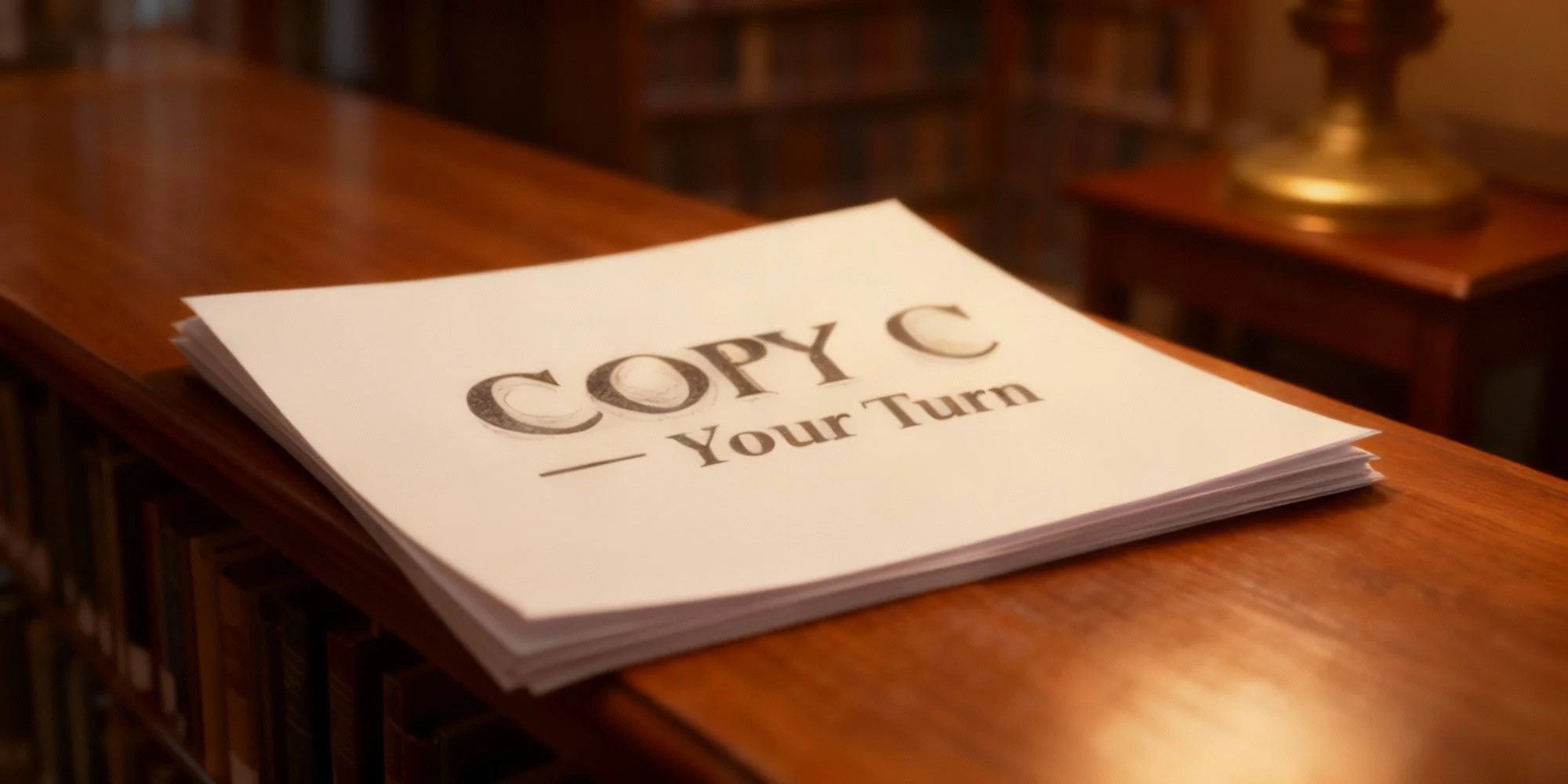
But one page remains behind on the counter.
A blank sheet.
Except for a handwritten line in neat, careful script:
COPY C
— Your Turn.
The printer in the back room stirs.
Lights flicker.
A low electric hum builds like something waking up.
[FADE OUT]
[MARISSA’S CAR — OUTSIDE HER CONDO — MADISON, WISCONSIN]
NARRATOR/LUNDY (Voice-Over):
A woman in her mid-30s — MARISSA — sits in her car, hands trembling.
Inside her purse:
photos of her husband with another woman
screenshots
a half-written, aborted text
the beginnings of a life exploding
MONTAGE —:
her day unravels in quiet, believable beats:
The HR meeting she’s too numb to follow
The friend who says, “Men are trash” but means well
The sickening déjà vu of betrayal she swore she’d never endure again
The loneliness of driving in circles because going home feels like failure
By the time Marissa finally screams:
“I hate that man!”
…it doesn’t feel cruel.
It feels human.
We side with her.
And that is when she hears a voice from the back seat.
A shimmer. A shift in air pressure.
Suddenly, the back seat is no longer empty.
Someone sits there:
KARLA KARMA.
Early-30s, stylish, effortless, Gen-Z-goddess-meets-demon-therapist aesthetic.
She leans back as if she’s been there for miles.
A wineglass appears in her hand, swirling nothing.
KARLA:
Oh honey. Hating him is just page one.
You want justice, don’t you?
Marissa slams the brakes.
Stares.
MARISSA:
Wh— who are you?
KARLA (smirks):
Someone who hears it every time a woman says
“I hate that man.”
(pause)
And someone who does something about it.
Karla Karma slides her fingers in the air and two shimmering icons appear.
One glowing red.
One glowing blue.
RED: Inner Torment —
His mind becomes a haunted house.
Insomnia. Guilt. Shame. Restlessness.
He will crumble from within.
BLUE: Outer Ruin —
His job collapses. Reputation crashes.
Finances die on impact.
He will crumble in the world.
Karla snaps her fingers — both vanish.
KARLA:
Pick one.
Just one.
Marissa trembles, gripping the steering wheel till her knuckles whiten.
MARISSA:
What’s the catch?
Karla smiles like she’s been waiting for that question.
KARLA:
There’s always a catch, sweetheart.
Marissa exhales shakily.
The storm outside thickens.
Her phone buzzes on the console — another lie from her husband.
She whispers:
MARISSA:
I… I think I know which one.
Karla leans in, delighted.
KARLA:
Say it out loud.
[CUT TO BLACK]
TO BE CONTINUED…
[END OF EPISODE 1]
NEW STORYLINE:
SIGNAL FIRES
SIGNAL FIRES:
I Hate
That Man!
Signal Fires
Episode 1:
The Extra Copy