
RILEY CLEMMONS
Pop | Piano-Driven Pop | Vulnerable Faith
BRIGHTNESS BORN FROM BROKEN PRAYERS
Riley Clemmons grew up in Nashville — the heart of Christian Contemporary Music — but she wasn’t a “church singer who got lucky.” She was a studio kid: writing at 13, recording at 14, publishing songs before she could drive. She was blending pop, soul, R&B, and CCM, while relentlessly honing her craft.
She studied vocal performance. She studied songwriting. She studied production. She wasn’t a “voice” — she was an architect. By the time she released her debut at 18, she already sounded like a seasoned artist.
Her breakout song Broken Prayers wasn’t written from triumph. It came from shame, exhaustion, feeling “not enough,” a deep fear of disappointing God, and emotional burnout at too young an age.
She once said: “I wrote it crying on the floor of my room. I didn’t feel worthy of praying anything at all.”
A Nashville Kid with a Studio Soul
Riley Clemmons came onto your playlist like a burst of light — not the neon kind, but sunlight through blinds on a rough morning. Her voice carries ache, youth, hope, and sincerity. She doesn’t perform faith — she embodies the quiet resilience you get after crying behind the wheel and then finally exhaling.
She blends: pop sparkle, R&B phrasing, dance-pop production, emotional vulnerability, big choruses, and vocal purity with soul edges.
She puts language to things most people can’t say out loud. Her songs feel like the moment when the tears stop, the mind quiets, and God feels near again. She sings hope without hype. Growth without guilt. Faith without fear. INFJs crave this tone.
Casey Recommends (Her Most Popular Tracks):
Better For It — Self-worth anthem.
For the Good — Radio hit with depth.
Headspace — Bold, empowering.
Fighting For Me —Signature ballad.
Keep On Hoping — Bright resilience.
DEEP-CUT SPOTLIGHT (Hidden Gem for Lorenzo):
“Brooke’s Song” — One of her least-known tracks, and one of her most devastating. It’s grief. It’s longing. It’s love that didn’t get to grow. It’s spiritual aching in melodic form.
Lorenzo Note:
“She sings like she’s praying with her eyes open.”
Dr. Kat Note:
“Her music is the emotional exhale you didn’t know you were holding back.”
FINAL CASEY NOTE — Why She Belongs in the Hall of Fame:
Riley Clemmons belongs because she does something rare: She dignifies vulnerability. Her songs don’t shout victory — they whisper healing. They remind you that God doesn’t just meet you at the finish line… He meets you in the breakdown, the questioning, the shame, the slow rebuild.
In your spiritual journey, Riley wasn’t the loudest voice — she was the most tender, and that made all the difference.
AUSTIN FRENCH
Pop | Radio Worship | Testimony-Centered
A STORY OF BROKENNESS, BOLDNESS & BEING FOUND
Austin French grew up in a small Georgia town where faith and dysfunction coexisted in the same rooms. His father was abusive. Home wasn’t safe. Music became his escape. Church became his refuge. Faith became his lifeline.
At 13, he prayed: “God, if you save me… I’ll spend my life telling people about You.” He meant it. But the pain didn’t vanish. He carried it into adulthood, into marriage, into fatherhood.
What makes Austin French different is that he sings from scars; he testifies from wounds; he writes from experience, not theory. That authenticity is why listeners cling to him.
Austin appeared on ABC’s Rising Star in 2014. He nearly won. He became a household name overnight. But fame wasn’t the turning point. The turning point was realizing that the world didn’t need another celebrity — it needed another survivor willing to speak.
He pivoted toward Christian music intentionally. Not to “sell records,” but because he wanted to tell the truth about God’s healing.
Why He’s on Lorenzo’s Playlist:
Because he doesn’t pretend. Authenticity is an INFJ love language — and Austin French sings from a place you recognize: wounded but not defeated; hopeful but realistic.
Austin French hit your playlist during a season where you were craving honesty — not perfect church music, not polished pop, but authentic human struggle wrapped in melody.
He doesn’t sugarcoat anything. He doesn’t pretend to have it all together. He sings like someone who’s survived a storm and is still drying off on the porch, saying: “I don’t know why God saved me… but I’m glad He did.”
His songs have grit. They have vulnerability. They have a man-standing-on-the-edge, choosing hope energy that INFJs resonate with immediately. From Born Again to Wake Up Sleeper to Freedom Hymn, his music feels like real recovery — not theory.
Casey Recommends (His Most Popular Tracks):
Freedom Hymn — The anthem that introduced him to the world.
Why God — One of his most vulnerable pieces.
Wake Up Sleeper — Top-tier modern Christian rock.
Born Again — Raw and powerful.
Good Feeling — Bright pop with emotional undertones.
DEEP-CUT SPOTLIGHT (Hidden Gem for Lorenzo)
“Jesus Can” — This is Austin at his rawest. The verses feel like pages torn from a private journal. It’s the kind of song that reminds you: Deliverance isn’t always dramatic. Sometimes it’s gradual. Sometimes it’s quiet. But it’s always real.
Lorenzo Note:
“He sings like someone who escaped the burning building and is still coughing out the smoke.”
Dr. Kat Note:
“Austin French is pain turned into purpose. He alchemizes trauma into testimony.”
FINAL CASEY NOTE — Why He Belongs in the Hall of Fame:
Austin French belongs on Page 2 because his music sits in the exact emotional space your spirit lived in for several years: not broken, but not rebuilt, not hopeless but not yet steady. He writes for people climbing out of the hole, not for those already on the mountaintop.
Austin French writes faith music for people who’ve been bruised by life and religion — and still showed up anyway. His songs favor honesty over certainty, rest over striving, and testimony over spectacle. In your BS / Christian Rock segment, he acts as a bridge between worship, pop, and lived experience.
WE ARE MESSENGERS
Christian Rock | Anthemic Worship | Irish Grit
BROKEN + BRAVE + BORN FROM SURVIVAL
We Are Messengers is led by Darren Mulligan, an Irishman with a voice built from gravel and grace. Before he ever stepped onto a Christian stage, he lived a life full of running — from God, from responsibility, from himself. Drugs, alcohol, emotional chaos, broken relationships. His marriage nearly ended. His identity nearly dissolved.
Then, in a moment he often describes as “God dragging me out of a pit I dug myself,” everything shifted. Not overnight — but undeniably.
He and his wife, Heidi, rebuilt their marriage. He rebuilt his character. He rebuilt his purpose. And he began writing songs that sounded like the journey back to God with scraped knees.
A Life Rescued + Repurposed
We Are Messengers didn’t form because Darren wanted to be a star. They formed because he wanted to serve — and survive. Their earliest songs were written while: holding their son in a tiny apartment, wrestling with shame, and trying to understand why God hadn’t given up on him.
Darren sings with a rawness most Christian pop avoids. He writes for people who feel too far gone. He testifies for people who don’t think they deserve grace. is accent, his growl, his emotional honesty — all combine into a sound that is equal parts confession and courage.
A Gritty Soul With a Past
On your playlist, We Are Messengers landed early. Their songs felt like the spiritual equivalent of someone grabbing your arm and saying, “Hey… don’t quit yet.”
They blend: raw vocals, Irish soul, dark-to-light themes, rock edges, emotional testimony, and lyrics that say what hurting people actually feel. We Are Messengers doesn’t make “pretty” Christian music. They make honest Christian music. And INFJs recognize honesty in half a second. Their music is hope with bruises on it — your favorite kind.
Casey Recommends (Their Most Popular Tracks):
Maybe It’s OK — Their signature confession/healing song. Emotional powerhouse.
Power — Bold, urgent, full of grit.
Come What May — Anthem of surrender and trust.
Everything Comes Alive — Energetic, joyful, deeply melodic.
Image of God — Moving, reflective, beautifully written.
DEEP-CUT SPOTLIGHT (Hidden Gem for Lorenzo):
“I Don’t Have the Answers” — One of their most vulnerable tracks — understated, raw, and painfully honest. No polish. No tidy bow. Just faith trying to breathe inside confusion. It captures precisely the feeling of: “God, I trust You, but I really don’t understand any of this.”
Lorenzo Note:
“He sings like a man who’s lived every lyric. Not performed — lived.”
Dr. Kat Note:
“This is spiritual grit. Hope covered in dust. Grace that shows up in the alley, not the sanctuary.”
FINAL CASEY NOTE — Why They Belong in the Hall of Fame:
We Are Messengers belongs because they speak to the survivor, not the saint.
Their music is built from torn pages and rebuilt lives. They remind you that spiritual transformation doesn’t always begin with worship — sometimes it begins with regret, honesty, and exhaustion.
Their songs don’t offer perfection. They offer presence — the presence of a God who doesn’t leave, even when you do. In your own awakening, they were the voice of gritty grace — the reminder that broken people aren’t disqualified… they’re the whole point.
TASHA LAYTON
Pop | Worship Pop | Confessional Lyrics
FROM BREAKDOWN TO BREAKTHROUGH
Tasha Layton didn’t begin her music career in Christian pop. She began it in pain. Raised in South Carolina, she grew up deeply spiritual — but also deeply sensitive.
A season of church hurt during her late-teens wounded her so badly she left faith entirely. She fell into depression, anxiety, and even suicidal thoughts. She walked away from church… but she didn’t walk away from music. Music became the lifeline that faith no longer felt like.
A Voice the World Noticed Before She Did
Before returning to her faith, she studied psychology and voice, poured herself into academic excellence, and eventually landed huge opportunities:
She appeared on American Idol
She spent four years touring with Katy Perry, singing on worldwide stages
She performed on late-night shows, award shows, and giant arenas
But inside, she felt empty. Massive crowds. Zero grounding. It wasn’t success she lacked — it was identity. Everything changed when a Christian counselor helped her reconnect with the God she thought she’d lost forever.
A Healing Voice with a Healing Mission
On your playlist, Tasha Layton shows up with clarity. Her music feels like someone turning on a light in a dim room. You weren’t drawn to her because of production. You were drawn to the sincerity.
She blends pop clarity, worship warmth, emotional transparency, modern production, a counselor’s insight, and a survivor’s honesty. Her voice is clean, powerful, and empathetic. It doesn’t lecture — it lifts.
Casey Recommends (Her Most Popular Tracks):
Look What You’ve Done — Her career-defining hit, emotionally massive.
Into the Sea (It’s Gonna Be Okay) — A modern anthem for anxiety and fear.
Never — One of her strongest vocal performances.
Love Lifting Me — Infectiously hopeful.
Comfort and Joy — Seasonal, but quietly stunning.
DEEP-CUT SPOTLIGHT (Hidden Gem for Lorenzo):
“Safe Here” — This is Tasha Layton at her most pastoral — a gentle, protective lullaby for anxious hearts. INFJs will feel this one in their chest. It’s not written for stadiums. It’s written for bedrooms, backseats, bathtubs, and late nights. A spiritual reassurance song disguised as pop.
Lorenzo Note:
“Her voice feels like someone sitting beside you on a night you don’t want to be alone.”
Dr. Kat Note:
“She sings from the exact point where therapy and faith intersect. You don’t just hear healing — you experience it.”
FINAL CASEY NOTE — Why She Belongs in the Hall of Fame:
Tasha Layton belongs because she embodies the heart of Christian-pop redemption. Her life is living proof that: you can leave faith, you can break down, you can lose identity, you can hit bottom, you can question everything — and STILL find your way back with more clarity than before.
Her music is faith re-discovered, not faith inherited. It’s hope rebuilt, not hope assumed. In your spiritual rebirth, she represents the second-wind season — the moment when light returns, not because life is easy, but because you finally let someone carry you.
CROWDER
Folk Rock | Southern/Country Worship | Gritty Praise
THE WILDMAN PROPHET OF MODERN CHRISTIAN MUSIC
Before he ever grew the beard or the legend, David Crowder was a Texas college kid who accidentally started a worship movement. He didn’t look like a worship leader. He didn’t sing like one. He didn’t write like one.
But students kept showing up anyway — because his songs felt alive. Crowder blends musical worlds nobody else touches: Appalachian gospel, alt-rock, southern blues, electronic flourishes, folk revival energy, and Sunday-morning theology.
He is the most unpredictable figure in Christian music — and one of the most authentic. He doesn’t “perform” faith. He embodies it, barefoot, stomping, grinning, shouting, whispering — and always sounding like he’s singing straight from a front-porch revival.
A Texas Outsider With a Sacred Calling
Crowder grew up in the Baptist South, skipped the “industry ladder,” and emerged through a college ministry he helped build into a national movement. He became famous because he didn’t try to become famous.
His early work with the David Crowder Band was experimental, emotional, and earnest. But his solo work? That’s where he turned into the genre-bending mad scientist of Christian music. Crowder is messy in the most beautiful way. He never hides the fact that faith is both a celebration and a struggle.
A Bluesman, a Storyteller, a Worship Leader — All at Once
When Crowder showed up on your playlist, it wasn’t because you were looking for his sound. It was because you were looking for his spirit. His songs bridge the gap between: southern grit, spiritual battle, messy redemption, and old-time religion.
You don’t listen to Crowder because he fits your genre — you listen because he breaks the mold. And INFJs respect anyone who refuses to be boxed in. His vibe is: “Faith is wild. Faith is loud. Faith is real. Come sing with me anyway.”
Casey Recommends (His Most Popular Tracks):
Good God Almighty — Infectious joy with gospel energy.
Run Devil Run — A spiritual fistfight in musical form.
Red Letters — One of the most powerful modern grace songs ever recorded.
All My Hope (w/ Tauren Wells) — Pure redemption.
In the House — A gentle, warm invitation.
DEEP-CUT SPOTLIGHT (Hidden Gem for Lorenzo):
“Crushing Snakes” — Not his biggest hit — but one of his most spiritually ferocious tracks. This is warfare music: gritty, prophetic, cinematic, unapologetically spiritual. It’s Crowder doing what only Crowder can do. f you're looking for a song to play on a day you need to feel spiritually armored up, this is the one.
Lorenzo Note:
“His music feels like a barn revival and a rock show had a baby — and somehow that baby grew a beard at age five.”
Dr. Kat Note:
“Crowder is spiritual catharsis. There’s something primal and healing about shouting hope with him.”
FINAL CASEY NOTE — Why He Belongs in the Playlists:
Crowder belongs because he expands the emotional vocabulary of Christian music. He gives voice to the side of faith that isn’t tidy — the side built from hard days, hard roads, and hard-won hope. He proves that God speaks just as loudly through stomping boots and blues riffs as through polished radio hits. And that makes him essential.
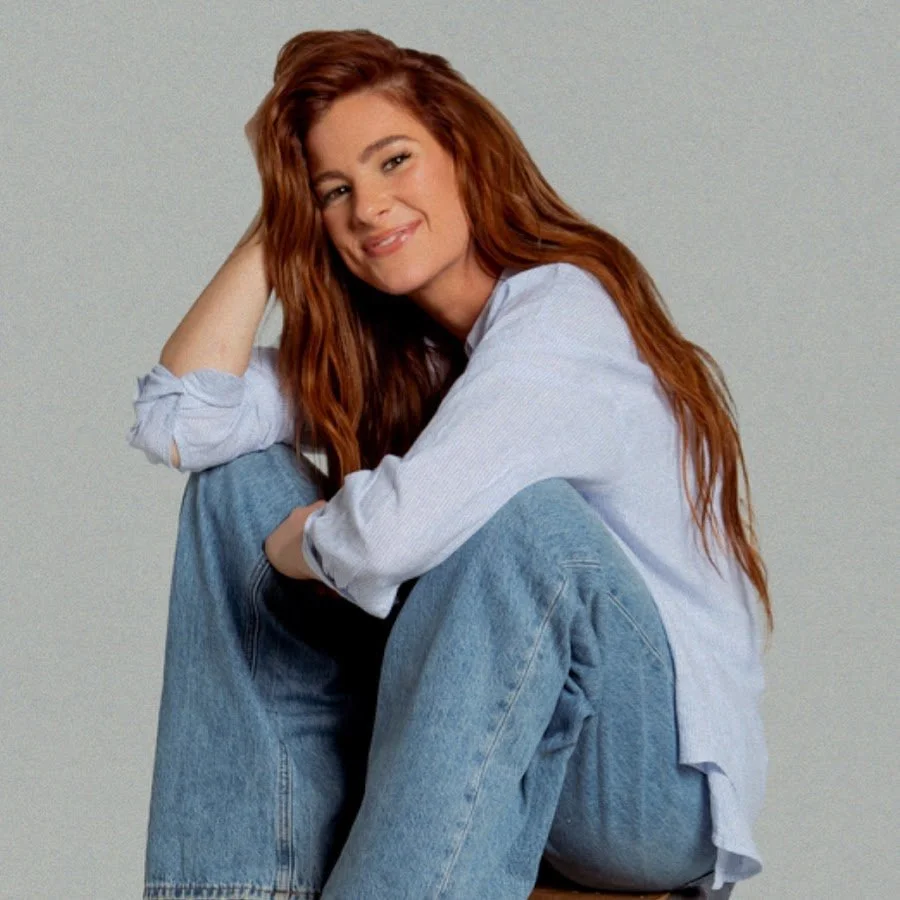
Riley Clemmons — Faith That Finds You Mid-Sentence
Fighting For Me (2018) — A reassurance anthem for moments when faith feels passive and exhaustion is loud. Riley reframes God not as a distant judge but as an active advocate — one who steps in before we know how to ask.
Keep On Hoping (2019) — A gentle endurance song that refuses both despair and forced optimism. Rather than pretending everything is fine, it acknowledges discouragement and then plants a quiet flag anyway. The hope here is stubborn, not shiny — the kind you carry because you have to.
Broken Prayers (2018) — One of the most honest faith songs of the modern era. Riley gives voice to prayers that trail off, contradict themselves, or don’t sound holy enough. The revelation isn’t that God answers perfectly formed prayers — it’s that He listens even when we can’t finish the sentence.
Running After You (2020) — A kinetic confession about God’s persistence rather than human devotion. The song flips the usual pursuit narrative: we aren’t chasing God nearly as much as He’s chasing us. The energy lifts, but the theology stays grounded — grace as motion, not pressure.
Better For It (2018) — A reflective closer that reframes hardship through hindsight without minimizing the pain. Riley doesn’t rush to gratitude; she earns it. The song recognizes that growth often arrives quietly, disguised as endurance.

Austin French — Honest Faith With Dirt Under Its Fingernails
Freedom Hymn (2020) — A modern testimony anthem that feels both personal and communal. Built on the language of deliverance rather than performance, the song celebrates freedom that’s received, not achieved. It carries the energy of revival without the hype — more grateful than triumphant.
Wake Up Sleeper (2020) — A call to spiritual awareness that avoids shame or urgency tactics. Instead of shouting “do better,” it whispers “remember who you are.” The song feels like a gentle shake on the shoulder rather than an alarm — perfect for listeners who resist pressure but respond to truth.
Born Again (2019) — A joyful confession of renewal that balances celebration with humility. The emphasis isn’t on perfection after salvation, but transformation in progress. The groove lifts the message without overpowering it — accessible, grounded, and genuinely glad.
Good Feeling (2021) — A celebration of faith experienced as joy, not obligation. The song captures the rare spiritual moment when belief stops feeling like work and starts feeling like lightness. It’s upbeat without being shallow — happiness rooted in belonging rather than circumstance. This is faith as relief, not pressure.
Holy Ground (2023) — A reverent, introspective track that reframes ordinary moments as sacred space. French suggests holiness isn’t confined to sanctuaries — it shows up in kitchens, cars, and quiet conversations with God. The song moves slowly, intentionally, inviting stillness rather than spectacle. A reminder that presence itself can be worship.

We Are Messengers — Faith That Stands Its Ground
God You Are (2020) — A steadying declaration built for moments when emotions wobble but belief holds. Rather than describing who God feels like, the song anchors itself in who God is. The repetition isn’t filler — it’s grounding. This track functions like spiritual ballast.
The Devil Is a Liar (2018) — A bold, confrontational anthem that calls out shame, fear, and accusation by name. The power of the song lies in its clarity: not everything in your head deserves your agreement. Muscular, unapologetic, and oddly liberating — truth as resistance.
Maybe It’s OK (2019) — One of the most quietly radical Christian songs of the past decade. It gives permission to be unfinished, anxious, doubting, and still loved. The chorus doesn’t fix you — it sits with you. For many listeners, this was the first time faith music felt emotionally safe.
Point To You (2018) — A purpose-driven anthem that reframes success as direction, not recognition. The song rejects self-centered achievement in favor of reflection — letting life, love, and even failure redirect attention toward God. Earnest without being preachy.
Power (2022) — A modern reminder that real strength isn’t loud. The song contrasts cultural ideas of power with spiritual endurance — patience, surrender, and trust under pressure. The build is intentional, rising without spectacle, landing with resolve.

Tasha Layton — Healing-Centered Faith With a Backbone
Look What You’ve Done (2021) — A testimony of transformation told without exaggeration or shame. Tasha frames healing as evidence, not performance — the quiet proof of a God who rebuilds from the inside out. The chorus feels less like celebration and more like awe. This is gratitude that remembers where it came from.
Love Lifting Me (2021) — A buoyant, soul-forward song that treats love as rescue rather than reward. It acknowledges emotional weight without dwelling there, focusing instead on the moment when grace interrupts gravity. Uplifting without being dismissive.
I Got You (2020) — A reassurance anthem that lands as relational rather than theological. God isn’t distant or abstract here — He’s present, attentive, and steady. The song feels like being met at eye level instead of talked down to. Simple, sincere, effective.
Good Things (2022) — A re-centering song for listeners who’ve learned to brace for disappointment. Instead of denying hardship, it gently challenges the reflex to expect the worst. Hope here is careful — not naïve — and that’s exactly why it works.
Safe Here (2023) — A quiet, intimate declaration of refuge. Tasha sings about safety not as escape, but as belonging — the kind that allows you to finally exhale. The restraint in the arrangement mirrors the message: peace doesn’t rush you.

Crowder — Joy With Calluses
Lift Your Head Weary Sinner (2012) — A revival-style anthem built for people who feel spiritually worn down rather than fired up. Crowder doesn’t deny the weight — he names it — then lifts it just enough to let light in. The song feels like a hand on your shoulder, not a finger in your face. Old-soul encouragement with modern muscle.
Good God Almighty (2021) — A joyful explosion of gratitude that refuses to stay seated. This is praise that dances because it remembers where it’s been. Crowder’s delivery turns theology into celebration without sanding off the edges. Faith here is loud, lived-in, and contagious.
Run Devil Run (2014) — A blues-rock confrontation track that treats spiritual resistance as active, not passive. The devil isn’t debated — he’s dismissed. Raw, stomping, and confident without arrogance. Truth as momentum.
Red Letters (2018) — A centerpiece song that reframes Christianity around the actual words of Jesus rather than religious noise. Crowder cuts through distraction by returning to the source — mercy, justice, love, sacrifice. The groove carries the message, but the lyrics do the heavy lifting. Essential listening.
All My Hope (2016) — A grounded confession of dependence that avoids both despair and bravado. The song acknowledges limits without shame and places hope squarely where it belongs. Simple, sturdy, and deeply reassuring — like leaning on something that doesn’t move.